Late-night snacking is one of the most common struggles I hear from people trying to lose weight. And I want to be very clear from the beginning: this is not always a willpower problem.
Sometimes your body is underfed. Sometimes your brain is tired. Sometimes stress, boredom, or habit takes over. And sometimes, the problem is very simple:
Your kitchen never officially closed.
When the kitchen stays “open” in your mind, your brain starts negotiating.
“Just one bite.”
“Maybe something small.”
“I already had some, so I might as well keep going.”
Before you know it, one small snack becomes grazing, and grazing becomes a pattern that makes weight loss feel harder than it needs to be.
That is why I teach many of my clients what I call the Kitchen Closure Routine — a simple, practical evening habit that helps signal to your brain that the eating part of the day is done.
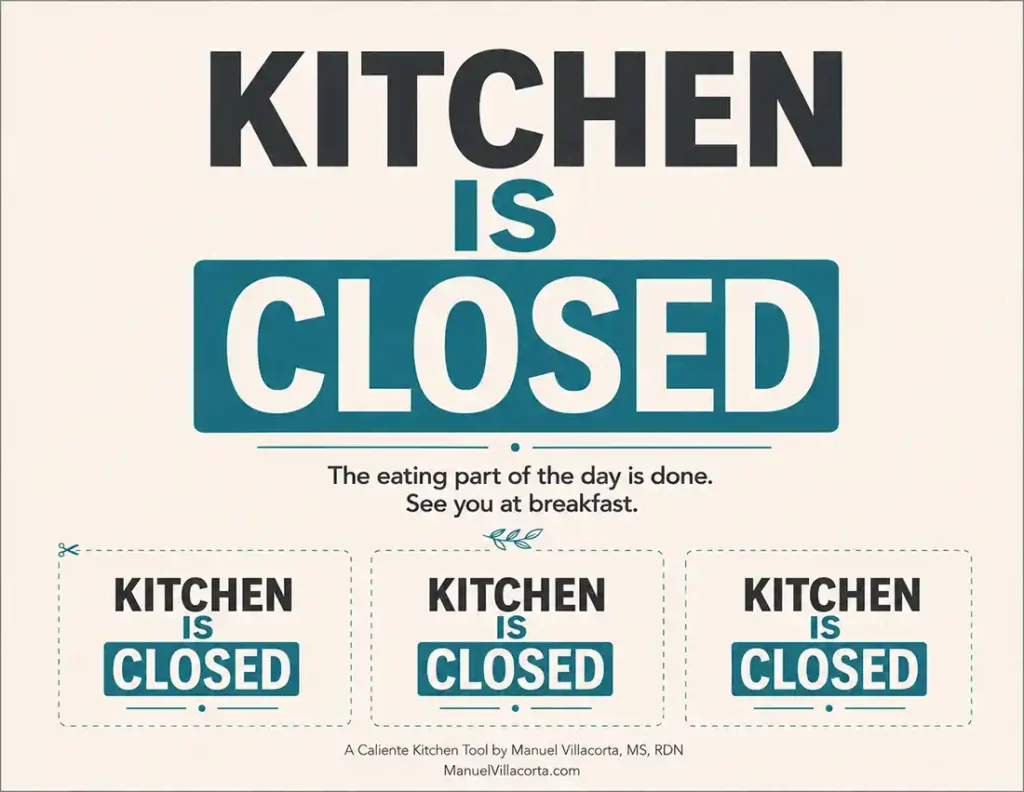
And yes, one of the most powerful parts of this routine is literally placing a sign on your refrigerator, pantry, or kitchen entrance that says:
Kitchen Is Closed.
Why Late-Night Snacking Happens
Late-night eating is not always about physical hunger.
For many people, nighttime snacking happens because of fatigue, stress, boredom, habit, emotional eating, skipped meals, or not enough protein, fiber, or carbohydrates earlier in the day.
Sleep and appetite are also connected. Research has shown that short sleep duration may affect appetite-related hormones, including higher ghrelin and lower leptin, which may increase hunger and appetite. Research on sleep duration, ghrelin, and leptin also supports this connection.
A National Academies report available through the NIH Bookshelf also summarizes that sleep restriction has been associated with lower leptin and higher ghrelin levels. A summary on sleep loss and appetite hormones.
This matters because by the end of the day, your brain is tired. Your decision-making is lower. Cravings can feel stronger. And if your body did not get enough fuel earlier, your hunger hormones can make you feel like you are in what I call hunting mode.
That is why the solution is not just “have more discipline.” The solution is to create structure.
Planned Snack vs. Unplanned Grazing
One of the most important distinctions I teach my clients is this:
A planned evening snack is not the same as unplanned late-night grazing.
A planned snack has structure. It has a portion. It has a purpose. You eat it, enjoy it, and stop.
Unplanned grazing is different. That is when you finish dinner, sit down to watch TV, and suddenly find yourself walking to the kitchen, opening the refrigerator, then the pantry, then the refrigerator again — as if something new magically appeared.
That is usually not intentional eating. That is autopilot.
If you know you are someone who gets hungry after dinner, there is nothing wrong with planning an evening snack. In fact, for many people, planning the snack ahead of time reduces guilt and prevents overeating later.
Some good planned evening snack options may include Greek yogurt with berries, cottage cheese with cinnamon, kiwi with walnuts, air-popped popcorn, herbal tea with a small protein-based snack, or fruit with a small portion of nuts.
The key is not perfection. The key is this:
Plan it, don’t chase it.
Why the “Kitchen Is Closed” Sign Works
This is one of my favorite strategies because it is simple, visual, and effective.
I tell my clients to take a plain piece of white paper and write in big letters:
Kitchen Is Closed
Then place one sign on the refrigerator, one on the pantry or cupboards, and one near the kitchen entrance if there is one.
It may sound too simple, but every client who has actually followed this strategy has told me it helps.
Why? Because late-night snacking often happens on autopilot.
The sign becomes a pattern interrupt. It forces your brain to pause before your hand opens the refrigerator or cupboard.
It gives your tired brain a reminder: “We already made this decision. The kitchen is closed.”
This is not about treating yourself like a child. It is about helping your tired brain follow the decision your rested brain already made.
That small pause can be powerful.
Think About a Restaurant
Think about a restaurant at the end of the night.
They clean the kitchen. They put the food away. They turn off the lights. They close the door. And they hang the sign that says: Closed.
They do not leave the kitchen open all night hoping people will not walk in and order more food.
Your home kitchen needs the same message.
The eating part of the day needs an ending.
The Kitchen Closure Routine
1. Finish dinner
Start by eating a balanced dinner that includes protein, fiber-rich carbohydrates, vegetables, and satisfying flavor. This helps your body feel nourished and reduces the chance that you will feel physically hungry later. The CDC notes that healthy eating patterns for weight management emphasize nutrient-dense foods, including vegetables, fruits, protein foods, dairy without added sugars, healthy fats, and whole grains.
2. Decide if you need a planned evening snack
Do not wait until 10 PM to make this decision. Ask yourself earlier in the evening: “Will I need a planned snack tonight?” If the answer is yes, choose it intentionally. Put it on a plate or in a bowl. Sit down. Eat it. Enjoy it. Then move on.
3. Clean the kitchen
Wash the dishes. Wipe down the counters. Put away leftovers. A clean kitchen sends a visual message that the eating part of the day is complete.
4. Put trigger foods away
Do not leave crackers, cereal, chips, sweets, nuts, or other easy-to-grab foods sitting out on the counter. This does not mean those foods are “bad.” It means you are designing your environment to support your goals.
5. Put up your “Kitchen Is Closed” signs
Place one sign on the refrigerator, another on the pantry or cupboards, and one at the kitchen entrance if that makes sense for your home. The goal is to catch the habit before it starts.
6. Make caffeine-free herbal tea
This step is important because you are not just removing a behavior — you are replacing it. Make a caffeine-free herbal tea such as chamomile, peppermint, ginger, cinnamon, or another calming flavor you enjoy. The tea gives your hands something warm to hold, your mouth something soothing to sip, and your nervous system a signal that the day is winding down.
7. Brush your teeth
Brushing your teeth creates another sensory boundary. The fresh mint taste can make food less appealing and reinforces the idea that eating is done for the night.
8. Turn off the kitchen lights
This is the final signal. The kitchen is closed. The day is winding down. Your body is moving from eating mode into resting mode.
What If You Are Truly Hungry at Night?
This is important: the Kitchen Closure Routine is not about ignoring real hunger.
If your stomach is growling, you feel physically hungry, or you know dinner was too light, honor that. Have a planned snack that supports your body.
But if you are not physically hungry — if you are tired, bored, stressed, or looking for comfort — the routine helps you pause and choose what you actually need.
Sometimes you need food. Sometimes you need rest. Sometimes you need comfort. Sometimes you need to go to bed.
The goal is not restriction. The goal is awareness.
Download the Free Kitchen Is Closed Printable
To make this easier, I created a free Kitchen Is Closed printable that you can download, print, and place on your refrigerator, pantry, cupboard, or kitchen entrance.
Use it as a simple visual reminder that the eating part of the day is done.
By providing your email, you will receive our weekly newsletter. Unsubscribe at any time.
Final Thoughts
Late-night snacking does not have to control you.
When you understand the difference between physical hunger, emotional eating, and autopilot grazing, you can create a routine that supports your body instead of fighting it.
So tonight, try this: plan your dinner, decide if you need an evening snack, enjoy it intentionally, clean the kitchen, put up your Kitchen Is Closed signs, make your herbal tea, brush your teeth, and turn off the lights.
Then walk away with peace.
You fueled your body. You honored your hunger. And now, you are done for the day.
Stop dieting, start living.
References
- CDC. Tips for Healthy Eating for a Healthy Weight.
- Spiegel K, et al. Sleep curtailment in healthy young men is associated with decreased leptin levels, elevated ghrelin levels, and increased hunger and appetite.
- National Academies Press / NIH Bookshelf. Extent and Health Consequences of Chronic Sleep Loss and Sleep Disorders.